When plans change: Rerouting an adventure in the Grand Canyon
By Dreama Walton, ultrarunner, coach, & mountain guide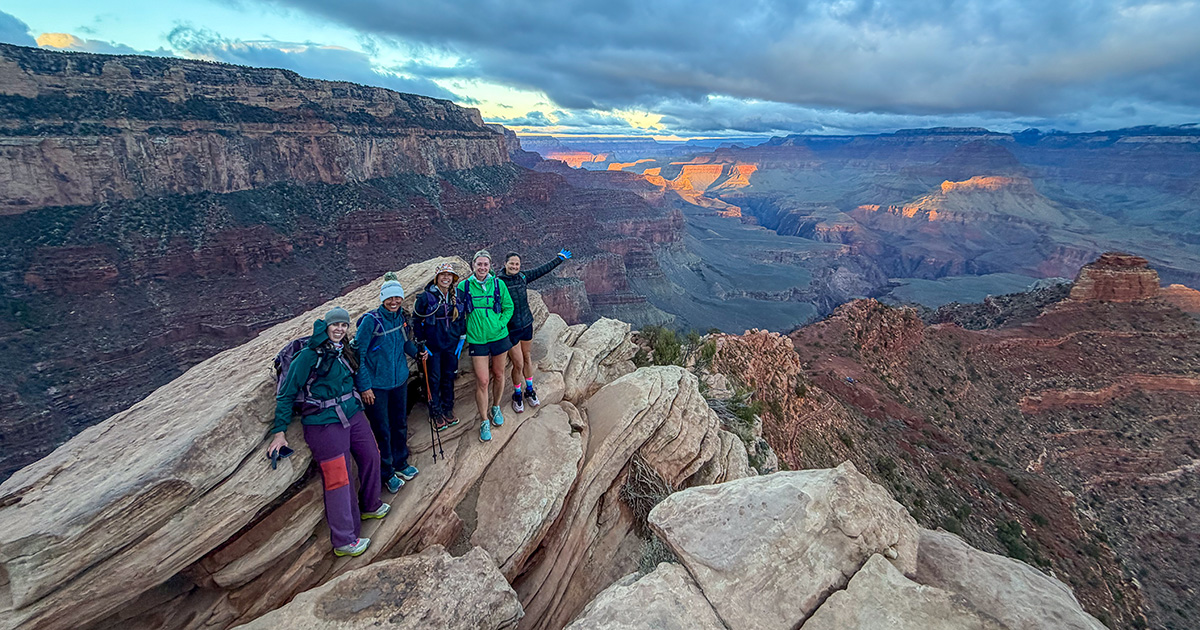
There’s a moment in almost every big adventure when the route you planned becomes the route you are no longer going to take.
Sometimes it happens months before you arrive. Sometimes it happens the morning you set out. And sometimes it happens while you’re already on the trail.
For our Grand Canyon adventure, it happened all three ways.
Planning for Rim to Rim to Rim
Our group of women had been working toward a Rim to Rim to Rim adventure for nearly two years. R2R2R isn’t your average hike. Crossing the Grand Canyon once and then turning around and doing it again requires fitness, preparation, careful route planning, and a healthy respect for a landscape where conditions can change quickly.
Our original plan was to start at the South Rim, descend into the canyon, climb to the North Rim, spend the night at the historic Grand Canyon Lodge, and make the return journey the following day.
The original Rim to Rim to Rim route. View full route »
We trained with that route in mind. We planned the mileage, logistics, gear, nutrition, and water. We knew where we wanted to go. Then the canyon reminded us that a route on a map is only a plan.
The First Change
About a month before our original trip in 2025, the Dragon Bravo Fire swept across the North Rim. Among the structures lost was the historic Grand Canyon Lodge.
Our trip suddenly wasn’t possible.
It was heartbreaking to see such an iconic part of Grand Canyon history destroyed, and on a much smaller and more personal scale, it meant letting go of an adventure these women had spent months preparing for.
So we regrouped. Rather than abandoning the goal entirely, we decided to try again the following year. This time, instead of relying on lodging at the North Rim, we would carry what we needed and camp. The route changed, but the goal remained.
We had another year to prepare, and we used it.
Then the Canyon Changed Again
About six weeks before our rescheduled adventure, another major weather event hit the canyon. Flash flooding caused extensive damage to trails and infrastructure, making parts of the canyon nearly unrecognizable and once again taking our planned Rim to Rim to Rim route off the table.
Two years of planning. Two completely different events. Two major changes to our route. At some point, you have to decide what the goal of an adventure really is. Was our goal simply to complete R2R2R? Or was it to challenge ourselves, spend time together, and experience the Grand Canyon on foot? As a group, we decided it was the latter. So, I opened Footpath and started looking at alternatives.
Instead of crossing the entire canyon, we planned a South Rim route that would still give us a substantial day below the rim. We would descend South Kaibab Trail, connect with the Tonto Trail, traverse across the canyon, and eventually climb back to the South Rim via Bright Angel Trail. It wasn’t R2R2R, but it was still going to be a beautiful and challenging adventure.
The new South Kaibab route. View full route »
I mapped the South Kaibab route in Footpath, and shared it with everyone before we headed out. Having the route available to the entire group was a small detail at the time. It would become much more important once we were inside the canyon.
When the Map Becomes a Tool, Not a Plan
By the time our trip arrived, rainy weather had created another complication. A rockslide on Bright Angel Trail resulted in a closure to through traffic so we decided that we would go as far as we could and would turn around and end the hike where we started.
Then, while we were descending into the canyon, one of the women in our group experienced a medical emergency. At that point, mileage, routes, and original goals stopped mattering. We assessed the situation and determined that the group needed to split. Some of us would return to the rim with her while the others continued farther into the canyon.
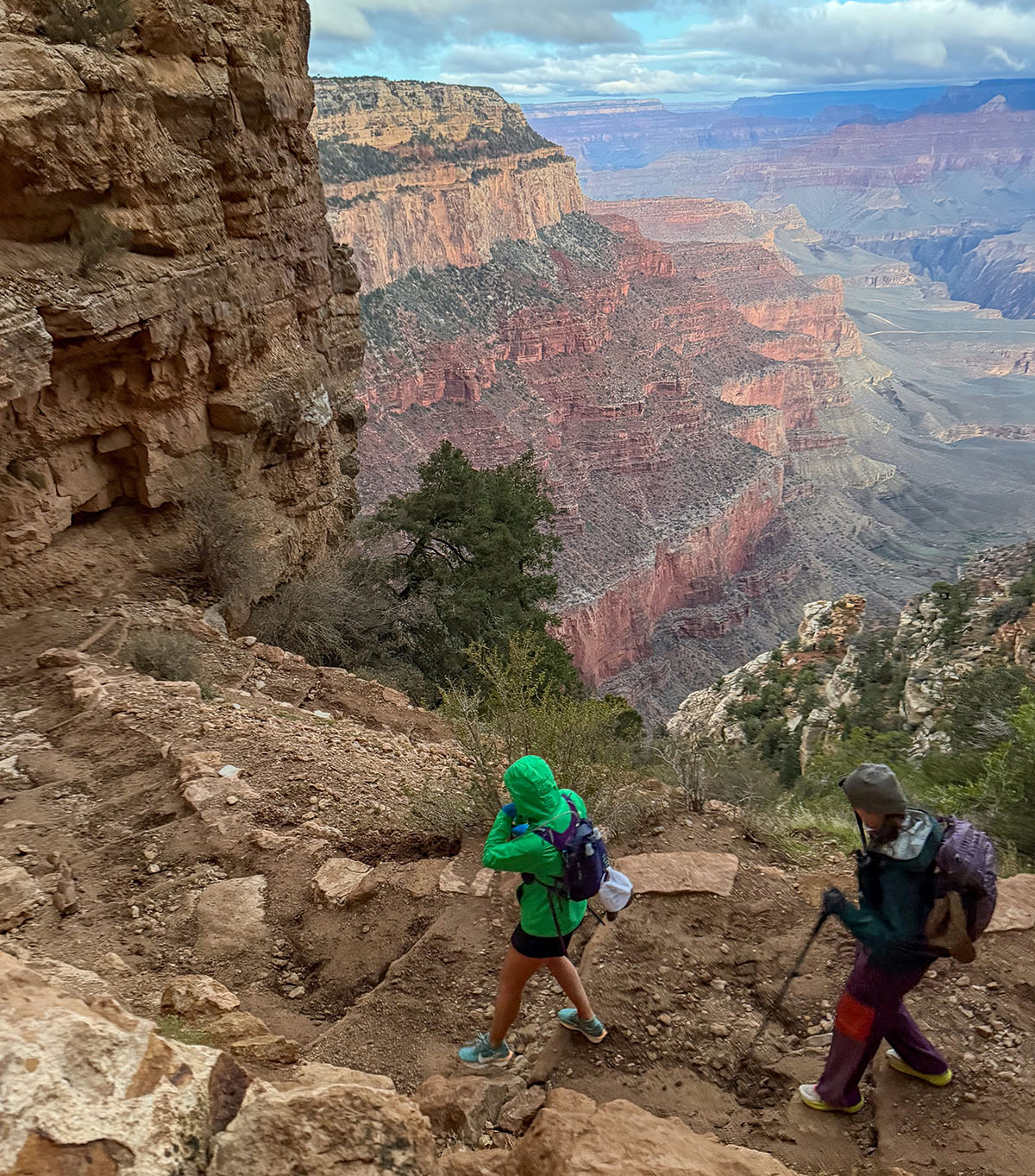
Splitting a group in a place like the Grand Canyon isn’t a decision to take lightly. But because everyone had access to the route I had created and shared before we started, the group continuing into the canyon wasn’t dependent on one person carrying the map.
They had the route on their phones and could navigate independently. Knowing where you are, where trails intersect, what alternatives exist, and how to get back becomes especially important when the original plan changes. And in the backcountry, eventually, something will change.
Adventure Requires Adaptability
We never completed Rim to Rim to Rim.
After nearly two years of training and planning, we didn’t even complete the alternative route exactly as we’d envisioned it. And yet, I don’t look at the trip as unfinished.
We still descended into one of the most extraordinary landscapes on Earth. We stood beneath canyon walls that seem impossibly large when you’re looking up at them instead of down from the rim. We moved through time in the layers of geological history, watched the landscape change with every mile, and experienced the Grand Canyon in a way you simply can’t from an overlook.
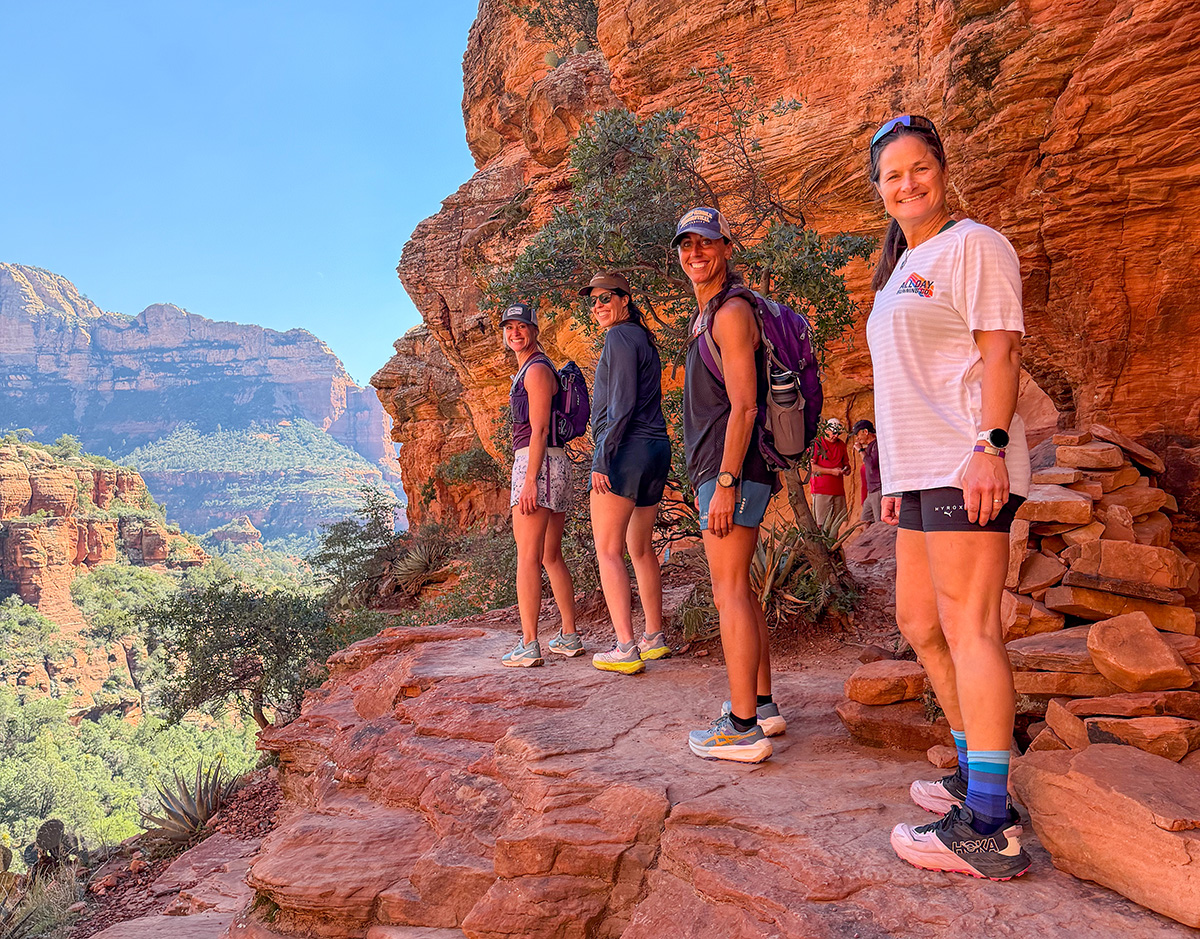
More importantly, we made decisions based on the conditions in front of us rather than the itinerary we had written months earlier. Outdoor adventures often celebrate perseverance: keep moving, push through, don’t quit. But experience has taught me that good decision-making in the mountains and backcountry sometimes looks exactly the opposite. Sometimes success means turning around. Sometimes it means shortening the route. Sometimes it means splitting the group.
Sometimes it means accepting that the mountain, weather, wildfire, flood, trail or your own body has changed the plan. Being able to adjust when things don’t go to plan is key to a “successful adventure”.
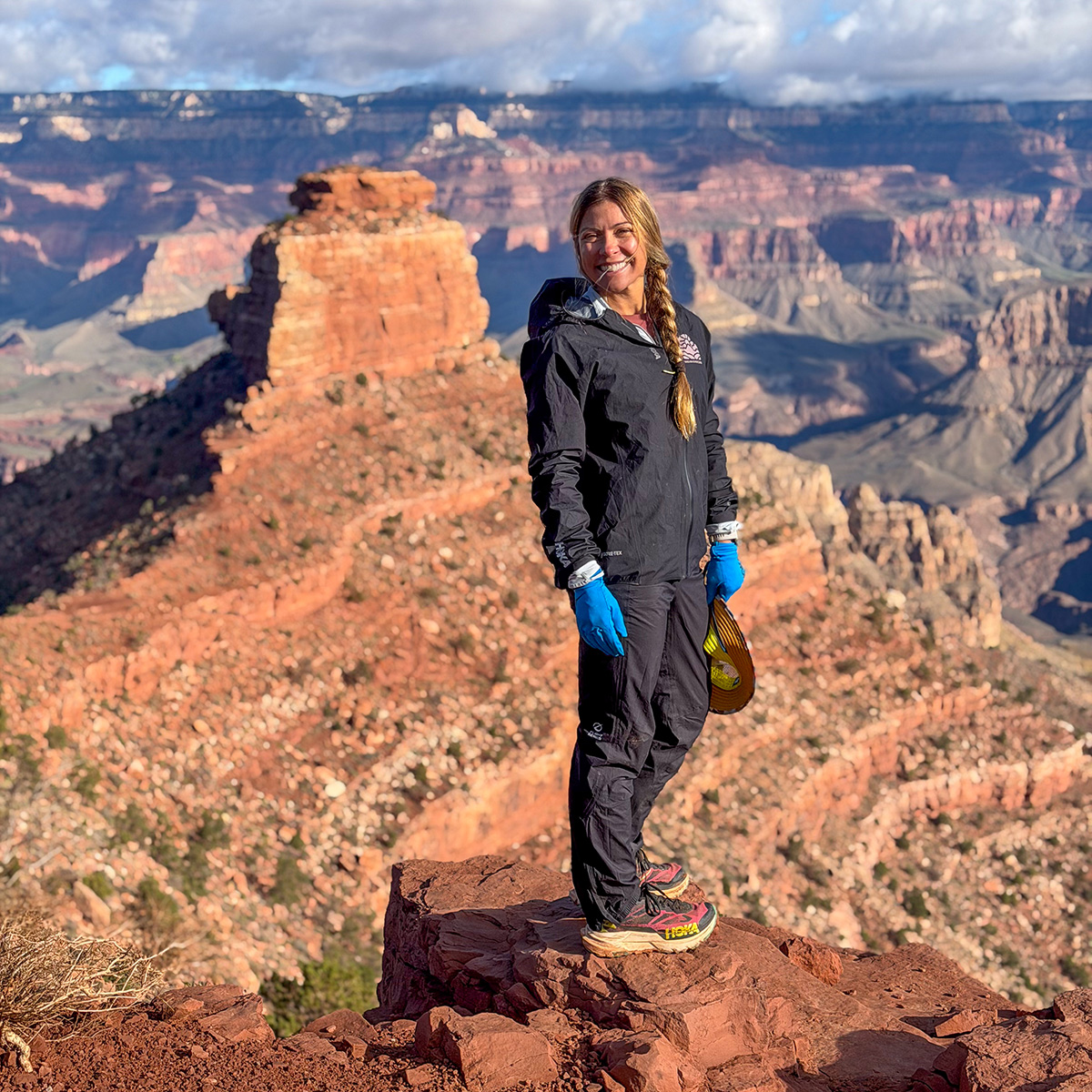
Plan the Route. Prepare to Change It
I still believe strongly in planning.
Before heading into the backcountry, I want to understand the route, distance, elevation, water sources, bailout options, trail intersections, and potential hazards. I want the route saved on my phone and available offline. And when I’m guiding a group, I want other people to have access to that information too. But a line on a map should never become more important than what’s happening around you. Our Grand Canyon trip looked almost nothing like the adventure we originally planned two years earlier. Wildfire changed it. Flooding changed it. A rockslide changed it. A medical emergency changed it. And every time, we adapted.
Maybe that’s one of the best lessons adventure can teach us.
Plan carefully. Train for the challenge. Download the map. Know your options. And then be willing to change everything when the situation calls for it.
Download Footpath today and be ready to adapt when the situation calls for it.