Smarter training starts with a map
By Dreama Walton, ultrarunner, coach, & mountain guide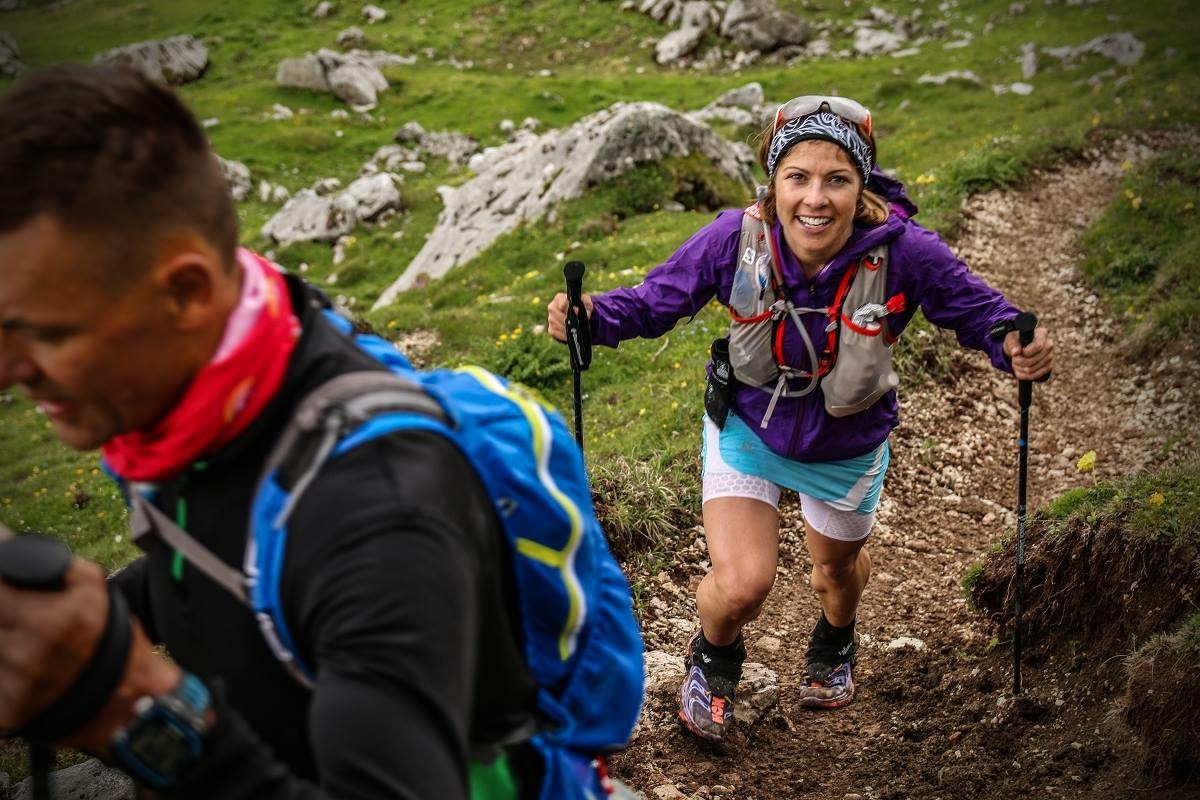
One of the most common mistakes I see in trail runners preparing for mountain races is surprisingly simple. They train for the distance, but not the terrain. Mileage increases and workouts get completed. Long runs stack up week after week. On paper, everything looks solid. Then race day arrives.
The course turns steep, rocky, and relentless and suddenly the terrain exposes a gap in preparation. The athlete may have the aerobic engine to cover the distance, but their body hasn’t been trained for the specific stresses that mountain terrain creates. Trail running, especially in mountainous environments, is far more than just cardiovascular fitness. It demands durability in the muscles and joints, efficiency in movement mechanics, and the ability to adapt to constantly changing conditions. As a coach, one of the most important shifts I encourage athletes to make is this: Stop thinking only about miles and start thinking about terrain.
Tools like Footpath make this shift much easier. Instead of simply mapping out a route to hit a certain distance, athletes can design runs that intentionally match the climbing, descending, and terrain demands of their goal race.
Because when it comes to trail running, terrain is the real training stimulus.

Climbing: Strength Disguised as Endurance
Climbing is often misunderstood by runners. Many assume that running uphill simply means running slower. In reality, climbing is a strength demand disguised as endurance. Long climbs rely heavily on muscular endurance in the glutes, calves, and hips. If those systems aren’t prepared, runners begin compensating with inefficient mechanics, which quickly accelerates fatigue. One of the simplest ways to prepare for climbing is to replicate it in training.
When planning workouts for athletes, I often start by identifying climbs that match the duration or elevation gain they’ll face in their race. With tools like Footpath, it’s easy to map local routes and immediately see the elevation profile of a run. That means workouts can be designed around terrain instead of guesswork. Instead of saying “run for X number of hours”, the instruction becomes something more specific: Find a route that includes a 30 to 40 minute sustained climb and run it at steady effort. That type of specificity changes the entire training stimulus.
Strength work supports this as well. Exercises like step-ups, squats, and loaded carries build the muscular endurance needed to sustain power on long climbs. However, even strong runners can struggle if their mechanics break down. One of the most common issues on climbs is collapsing at the hips. When runners fold excessively at the waist, breathing becomes restricted, and power transfer decreases. Instead, efficient climbers maintain a slight forward lean from the ankles rather than the waist. This keeps the hips engaged while allowing the lungs to work freely.
Stride length also changes on climbs. Successful runners shorten their stride and increase cadence, adjusting their rhythm to match the terrain rather than trying to maintain flat-ground mechanics.
These small adjustments may seem minor, but over the course of a long climb, they can dramatically reduce energy expenditure.
Example of choosing a route that has a long sustained climb with descent:
Example of choosing a route that has a long sustained climb with descent
Descending: Where the Real Damage Happens
If climbing is the most obvious challenge in mountain running, descending is often the most destructive. Downhill running introduces large eccentric forces as the quadriceps absorb impact with every step. Over long distances, these braking forces place enormous stress on the legs.
Many runners discover this the hard way when their quads are completely shot halfway through a race. The key to avoiding this is preparing the body for those forces in advance. I remember when I was running the Zugspitz 100K in 2013, and I ran up on a guy who was struggling to take a step. I thought for sure he had fallen and injured himself because he was hunched over, crying. So I, of course, asked if he was okay. It was then that he told me, “Meine Quads sind kaputt” and sure enough, when he stood upright leaning on his poles, I could physically see them spasming. He said he would be okay, and luckily, we were close to the next aid station. His day was over. A seemingly fit, young guy had to end his race because his quads couldn’t handle the race-day impact and demand.
Strength training plays an important role here, particularly exercises that emphasize eccentric control. Slow step-downs, decline squats, rear-foot elevated split squats, and single-leg deadlifts all help build the capacity to absorb downhill impact.
But strength training alone isn’t enough. Athletes also need to practice descending on real terrain.
Downhill running should be introduced gradually, starting with short, smooth descents before progressing to longer downhill intervals or technical trails. This is another place where route planning tools become incredibly useful. Using Footpath, athletes can easily find routes with controlled downhill sections and gradually increase exposure as their body adapts. Just as important as strength is downhill technique.
Efficient downhill runners keep a slight forward lean and maintain quick, light steps beneath their center of mass. Runners who lean back or over-stride create excessive braking forces, which rapidly fatigue the quads.
The goal is to flow with gravity rather than fight it.

Designing Routes That Mirror Race Demands
One of the most overlooked aspects of trail training is intentional route design. Too often, runners build their training around distance alone. But on trails, distance is only part of the equation. Terrain determines how the body is stressed. Instead of prescribing miles, coaches should think about terrain demands.
How long are the climbs in the race? How steep are they? Where do the descents occur? Does the course include technical terrain late in the race?
When athletes analyze a race course and then design training routes that mimic those demands, their preparation becomes far more effective.
Footpath makes this process incredibly intuitive. By simply drawing routes on a map, athletes can see elevation gain, climb length, and grade before they even step outside. That means workouts can be built around terrain characteristics rather than guesswork.
For example, if a race includes two sustained 2,000-foot climbs, training should include efforts of similar duration and vertical gain. If the course includes long descents late in the race, athletes should practice descending while fatigued.
When training mirrors race terrain, both the body and mind become familiar with the demands they’ll face, and then nothing on race day feels completely new.
To race this: To race this
Train on this: To race this
Train the Demands of the Race
Mileage builds the aerobic engine. Terrain builds resilience. If a race includes thousands of feet of climbing, long descents, and rugged terrain, those same stressors must appear in training. Otherwise, race day introduces forces that the athlete has never rehearsed. When runners start thinking about terrain instead of just distance, training becomes far more specific. Climbs become purposeful. Descents become practiced. And the entire training process begins to mirror the reality of the race itself. When athletes arrive at the start line with that kind of preparation, they don’t just have fitness. They have confidence.
Confidence that their body can handle the climbs.
Confidence that their legs will hold up on the descents.
Confidence that they’re ready for whatever terrain the mountains put in front of them.
And in trail running, that confidence can be just as valuable as fitness itself.
📲 Download Footpath and start training with smarter, terrain-specific routes today.