Stop obsessing over distance, start studying elevation
Everyone loves talking about miles logged. Whether you’re a runner, cyclist, or hiker, distance is the easiest metric to share and compare. It’s clean, simple, and usually earns a reaction like, “I don’t even like driving that far.”
But while mileage looks impressive in a training log or calendar screenshot, it’s actually a poor predictor of how difficult a route will feel. If you’ve ever finished a workout thinking, “That was way harder than I expected,” the problem probably wasn’t the distance. It was the terrain.
Inside Footpath, distance is just the starting point. The elevation profile is where the real story lives. If you’re wondering how to use elevation profiles in Footpath, check out this guide.
Why 10 miles can feel like 20
Ten flat miles is one type of effort. Ten miles with 3,000 feet of gain is something completely different. Your body doesn’t respond to a number on a screen. It responds to stress. And climbing dramatically increases that stress. Elevation gain drives muscular fatigue, raises heart rate, increases fuel demand, and often extends recovery time. Add significant descending to the mix and the strain compounds even more. Pro tip: steep descents should not be overlooked in training either!
This is why two routes with identical mileage can feel worlds apart. One leaves you feeling strong and smooth. The other leaves you depleted and questioning your pacing decisions.
The difference isn’t distance. It’s vertical.
Before heading out, it’s worth opening your route in Footpath and looking beyond total miles. Studying the elevation profile gives you a preview of the effort required long before you lace up.

Not all gain is equal
The density of the elevation gain is another factor to consider. Two routes can both show 3,000 feet of climbing across 10 miles. One might feel steady and controlled. The other might feel brutal. How tightly the climbing is packed together is what we mean by elevation density. For example, a long, gradual climb lets you find rhythm. Whereas short, steep spikes force repeated surges.
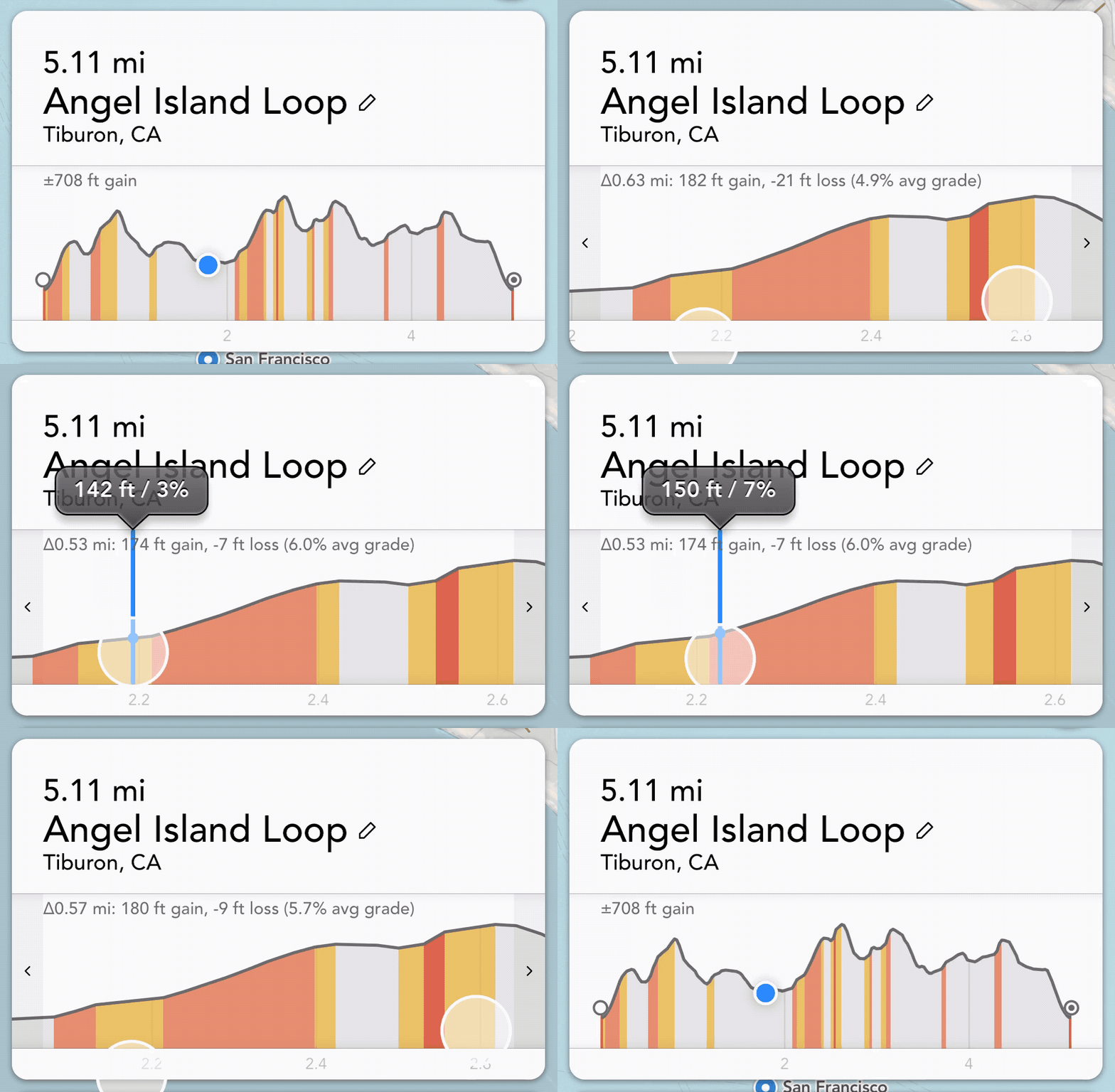
In Footpath, scroll along the elevation profile and tap different sections of the graph. Watch the map highlight where those climbs actually live.
You’ll immediately see:
- Where the steepest pitch is
- Whether the hardest climb hits early or late
- If there are stacked efforts in the middle
These factors should be taken into consideration as you determine your pace and fueling plan.
Look at gain per mile
One of the simplest ways to evaluate difficulty is by looking at feet of gain per mile. As a loose guideline, routes averaging around 100 feet of gain per mile (2% grade) are generally very runnable. Around 300 feet per mile (5% grade) begins to feel moderately demanding. Once you approach 500 feet or more per mile (10%+ grade), the effort becomes significantly more strength-based and technical. You don’t need to obsess over the exact numbers. The goal is awareness.
If your recent long runs have averaged 150 feet of gain per mile and your upcoming race or mountain objective averages 400 feet per mile, that’s not just a small progression. It’s a major shift in demand. The terrain is asking something different of your body.
Footpath makes these comparisons visual, and climbs are color-coded by steepness. By pulling up routes with similar mileage and studying their elevation profiles, you can quickly see how the terrain differs and whether your current training aligns with your goal.
Take a look at these two very different 10-mile routes: one from a race just outside Phoenix, Arizona, and the other a section of Vermont’s Long Trail.
~100ft per mile on cruisey desert trail
~300ft per mile on wet, rocky, rooty trail
Plan smarter
Before your next long run, ride, race build, or mountain objective, study the route. Scroll through the elevation profile. Find the crux. Look at where the biggest demands fall and think about how you want to pace it.
Mileage only tells part of the story. Elevation tells the truth.
If you’re training for something with significant gain, be honest about that and prepare accordingly. Match your training routes to the demands of your goal, not just the distance. And even if you’re a flatlander, you’re not doomed. With thoughtful planning, hill repeats, treadmill climbing, strength work, and smart route selection can help you prepare for mountainous terrain.

Training with terrain in mind is all about preparation. Open Footpath and start studying the elevation profiles of your upcoming adventures, so you know exactly what the miles are asking of you.